

A safety notice, from the first photo to the verified fix.
A useful construction safety notice separates what you observed from what still needs checking, names one responsible company, requests a specific correction, and keeps the reply separate from verified closeout. This fictional rebar example shows each step.
Demonstration only. The scene and record illustrate a workflow, not a customer incident or a professional assessment of this photograph. Do not delay immediate protective action while preparing paperwork.
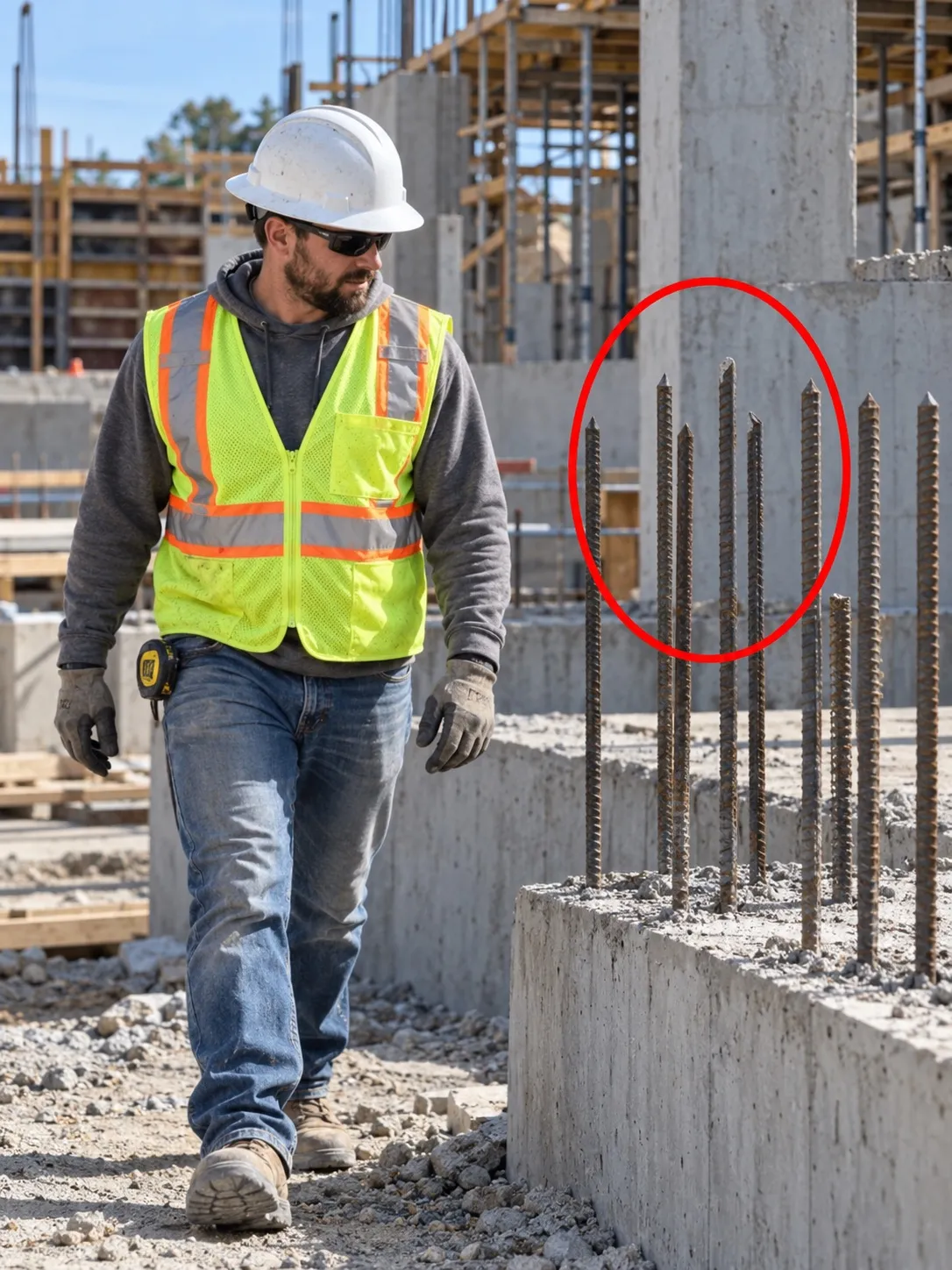
Give one issue its own record
| Field | Fictional example |
|---|---|
| Notice | DEMO-001 · Protruding rebar beside a work route |
| Location | Demonstration project · foundation work area, east access route |
| Responsible company | Concrete subcontractor; designate an actual responsible person before issuing. |
| Due condition | Protection checked before work exposes employees to the affected bars. Set a real date and time for the project; a due date is not permission to continue unsafe work. |
| Reference to verify | 29 CFR 1926.701(b): rebar impalement protection. Confirm employee fall exposure and applicable jurisdiction. |
A worked corrective action notice
Illustrative wording for a fictional site. Adapt it to verified conditions; it is not a completed inspection or an OSHA citation.
- Observed condition
- Protruding reinforcing steel is visible beside a work route. No guarding is visible on the photographed bar ends.
- Verify before issuing
- Confirm the actual fall exposure, surrounding work levels and any guarding outside the frame before deciding whether the cited provision applies.
- Requested correction
- Protect employees from the exposed impalement hazard and have suitable guarding installed and checked before work exposes them to the bars. Record the affected area and the responsible contractor.
- Recipient’s reply
- Describe the guarding installed, identify the affected bars and attach photographs showing the guarding and the adjacent work route.
- Closeout check
- Check the entire affected area and the suitability of the guarding on site. Do not close the record merely because a cap appears in an after-photo.
Use the free fillable notice and reply template to record the condition, responsible company and due date. See a complete notice-to-closeout example or how a subcontractor replies.
Example of a useful subcontractor response
“Access to the affected route was restricted. Guarding was installed across the identified bar ends. Attached: photographs showing the guarded section and work route, plus the guarding specification. Ready for your site verification.”
This is illustrative response wording, not evidence of a completed correction. A reply should identify what changed and what remains outstanding. If work is incomplete, use an in-progress or extension-requested status and explain the remaining action; do not mark it completed.
Keep verification separate
On return to the area, check the actual exposure and guarding. Record who checked, when, the result and any remaining action. Keep the original notice, reply, before/after evidence and verification together. A recipient’s “done” message alone is not a closeout.
In Cirqify, review the draft from your marked photo, send the notice, then import the returned reply PDF into the issue timeline. Recipients can reply without buying the app. Follow the issue-tracking workflow to keep response received and verified closeout distinct.
Use this structure for other observations
- Temporary power: verify the protection method before writing a notice.
- Excavations: record conditions and the protective-system assessment.
- PPE: identify the actual task, exposure and equipment.
- Damaged cords: keep observable damage separate from electrical tests.
- Floor holes: verify the opening and protection on site.
Download the blank, fillable notice and reply PDF. For the rule behind this example, read OSHA’s official 1926.701 text.